What a Dark Web Access App Actually Does
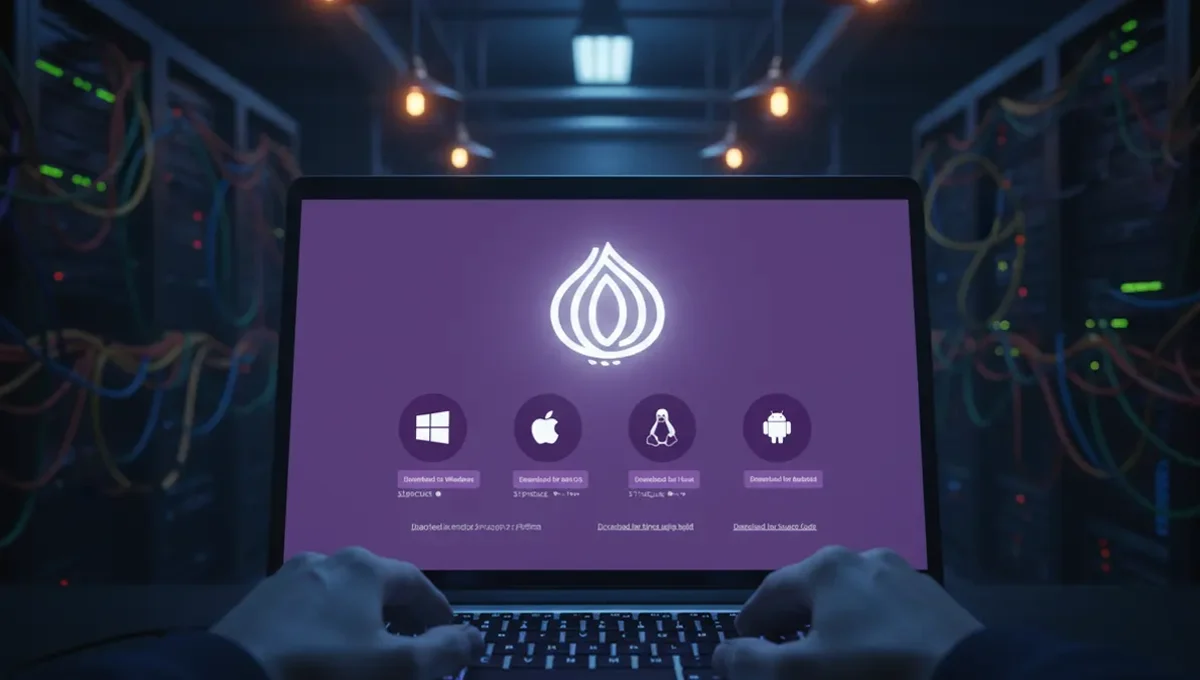
A dark web access app is software that anonymizes your internet connection by encrypting your traffic and routing it through a network of volunteer-operated servers. The Tor Browser is the primary tool for this purpose. When you use it, your requests pass through multiple relays before reaching their destination, making it extremely difficult for anyone to trace the connection back to your real IP address or location.
These apps do not make you invisible or untraceable by themselves. They are one layer of protection. Your operating system, browser habits, and the websites you visit all leak information if you are not careful. A dark web access app handles the network routing, but you remain responsible for operational security on your device.
How Dark Web Access Browser Technology Works
The Tor network operates by dividing your connection into encrypted layers, each removed by a different relay. This is why it is called onion routing: each relay peels away one layer of encryption, revealing only the address of the next relay, never the origin or final destination.
When you use a dark web access browser like Tor Browser, it automatically connects to the Tor network and routes all traffic through this system. The browser also disables plugins, JavaScript in certain contexts, and other features that could leak your real IP address. The network itself is maintained by thousands of volunteers who run relays. This decentralized design means no single entity controls Tor, but it also means the network is only as secure as the weakest relay and your own operational discipline.
Types of Dark Web Access Tools and Portals
Several applications and configurations exist for accessing the dark web, each with different trade-offs:
- Tor Browser: The official application from the Tor Project. It is the most widely used and recommended tool. It receives regular security updates and is designed specifically for anonymity.
- Tails: A live operating system that routes all traffic through Tor by default. It leaves no trace on your computer after shutdown and is useful for high-risk scenarios.
- Whonix: A virtual machine setup that isolates Tor and your applications on separate machines, adding a layer of compartmentalization.
- VPN combined with Tor: Some users connect to a VPN before using Tor, though this adds complexity and may reduce anonymity if the VPN provider logs traffic.
Each tool has different strengths. Tor Browser is the easiest entry point. Tails and Whonix are more complex but offer stronger isolation. Combining tools does not always improve security; it often introduces new vulnerabilities if misconfigured.
Reality: How Dark Web Access Apps Fail in Practice
Three critical failure modes occur repeatedly in the real world:
User behavior undermines anonymity: People log into social media accounts, use old usernames, or share personal details while on the dark web. The Tor Project documentation emphasizes that anonymity is a practice, not a guarantee from software alone. This matters because law enforcement has successfully identified users who believed they were anonymous simply by correlating their online behavior with known personal information.
Malware and endpoint compromise: A compromised device defeats any network-level anonymity tool. Security-vendor incident reports show that users downloading files from dark web marketplaces often receive trojans or spyware that capture keystrokes and screenshots. This matters because your device is the weakest link; Tor cannot protect you from malware running on your computer.
Network-level attacks and exit node surveillance: Academic research on onion services has documented that a determined attacker controlling many Tor relays can correlate traffic patterns to identify users. Additionally, exit nodes (the final relay before reaching the destination) can see unencrypted traffic if the destination website does not use HTTPS. This matters because it shows that Tor is not a magic shield; it is a tool that reduces risk under specific conditions, not eliminates it.
Setting Up a Dark Web Access App Safely
Before installing any dark web access app, prepare your device and environment:
- Update your operating system and all software to the latest versions. Unpatched vulnerabilities are a primary attack vector.
- Disable plugins in your browser settings if you plan to use Tor Browser. Plugins can bypass Tor routing.
- Consider using a dedicated device or virtual machine if you plan frequent dark web access. This isolates any potential compromise.
- Download Tor Browser only from the official Tor Project website. Verify the PGP signature of the installer to confirm authenticity.
- Do not maximize your browser window. Fingerprinting attacks can identify you based on screen resolution and other browser properties.
- Disable JavaScript in Tor Browser settings if you are accessing untrusted sites. JavaScript can leak your real IP address.
- Never use plugins, extensions or add-ons in Tor Browser unless you understand the security implications.
After installation, test your setup by visiting a site that displays your IP address. You should see a Tor exit node IP, not your real address. If your real IP appears, your configuration is broken and you should not proceed until you fix it.
Common Mistakes When Using Dark Web Access Links
People make predictable errors that compromise their anonymity:
Trusting links from untrusted sources: Dark web access links shared in forums or chat rooms often lead to phishing clones designed to steal credentials or inject malware. The Hidden Wiki and other directories are frequently mirrored by attackers. Always verify onion addresses using PGP-signed announcements from the official source.
Resizing the browser window: Tor Browser recommends keeping the window at a standard size. Resizing it creates a unique fingerprint that can be used to identify you across sessions, even if your IP appears different.
Mixing Tor and non-Tor traffic: If you use Tor Browser for dark web access but then open a regular browser to check email or social media, you have linked your Tor activity to your real identity. Keep these activities completely separate.
Assuming HTTPS means the site is safe: Encryption protects the content of your communication, but it does not mean the website is legitimate or that the operator is trustworthy. Many scam sites use HTTPS.
Downloading files without caution: Files from dark web marketplaces and forums frequently contain malware. Use a virtual machine or isolated device to open them, and scan them with antivirus software before trusting them.
Verifying Dark Web Access Portal Legitimacy
The dark web is rife with phishing clones and imposter sites. Verification requires multiple steps:
- Locate the official PGP public key of the site or service you want to access. This is usually published on a clearnet (regular internet) mirror or the official project website.
- Download the PGP-signed announcement or address list from the official source.
- Verify the signature using the public key. If the signature is invalid, the address is not authentic.
- Use only the onion address from the verified announcement. Do not rely on links from forums, search results or other users.
- Check the site's security certificate and onion address bar in Tor Browser. Onion addresses are long strings of random characters; memorize or bookmark the correct one.
- Be aware that even verified sites can be compromised. If a site behaves unusually or asks for unexpected information, close it and verify the address again.
This process is tedious, but it is the only reliable way to avoid phishing. Many users lose money or get infected because they skip verification and assume a site is legitimate based on its appearance.
Moving Forward: Practical Next Steps
Using a dark web access app responsibly means understanding that anonymity is a tool, not a guarantee, and that your behavior matters more than your software. Before you install anything, clarify why you need dark web access. Legitimate reasons include security research, accessing information in censored regions, or protecting privacy from surveillance. If your goal is to browse marketplaces or forums out of curiosity, the risks often outweigh the benefits.
Start by downloading Tor Browser from the official Tor Project website and reading their security guidelines. Verify the download using PGP if you are comfortable with that process. Set up a test environment, such as a virtual machine, and practice accessing a known legitimate onion site. Bookmark the verified address and never rely on search results or links from other users to find it again. Keep your device updated, use strong passwords, and assume that anything you download from the dark web could be malicious. Your first step today is to visit the Tor Project website, understand their threat model, and decide whether dark web access aligns with your actual needs.
Frequently asked
What is the best dark web access app for beginners
Tor Browser is the best starting point. It is free, officially maintained, and designed specifically for anonymity. Download it only from the official Tor Project website. Tails and Whonix are more secure but require more technical knowledge and setup time.
Can I use a VPN instead of a dark web access app
No. A VPN encrypts your traffic to the VPN provider, but it does not hide your IP address from websites you visit or provide the anonymity features of Tor. VPNs and Tor serve different purposes. Some people use both, but this adds complexity and does not necessarily improve security.
Is using a dark web access app illegal
Using Tor Browser and accessing the dark web is legal in most countries. However, what you do on the dark web may be illegal. Accessing marketplaces that sell drugs, weapons or stolen data is a crime. Law enforcement agencies actively monitor dark web activity and have successfully prosecuted users.
How do I know if a dark web access link is real
Verify the onion address using a PGP-signed announcement from the official source. Do not trust links from forums, search results or other users. If you cannot find a verified address, the site may be a phishing clone designed to steal your information or infect your device.
Can I be traced if I use a dark web access app
Tor makes tracing extremely difficult, but it is not impossible. Law enforcement has successfully identified users through malware, user behavior analysis, and network attacks. Your device security, operational discipline and the websites you visit matter as much as the app itself.