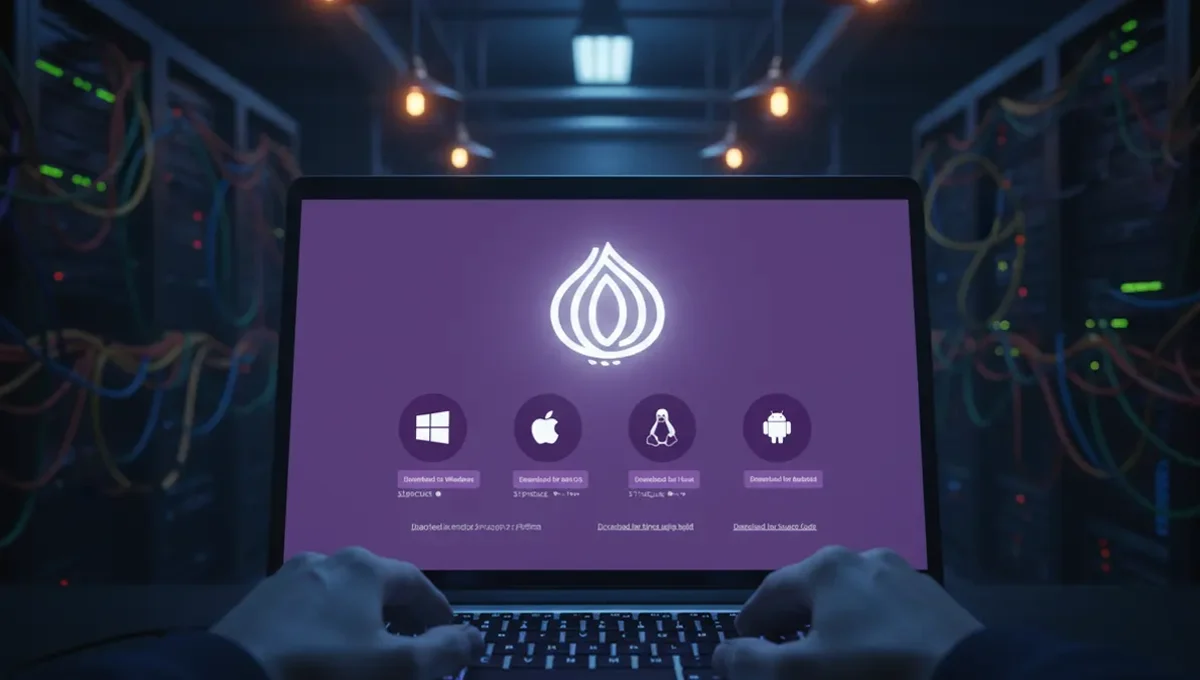
What a Dark Web Access Browser Does
A dark web access browser is software that connects you to the Tor network, a system of volunteer-operated servers designed to anonymize internet traffic. When you use the Tor Browser, your data passes through at least three relays before reaching its destination, and each relay only knows the previous and next hop, not the full path. This architecture makes it difficult for network observers to link your IP address to the sites you visit.
The Tor Browser is built on Firefox and maintained by the Tor Project, a nonprofit organization. It includes additional privacy features beyond standard Firefox, such as disabling JavaScript by default and blocking plugins that could leak your real IP. Other tools like Tails (a live operating system) and Whonix (a virtual machine setup) provide dark web access through Tor but add extra isolation layers to protect your entire system, not just your browser traffic.
How Tor Browser Enables Onion Site Access
Onion sites are websites hosted on the Tor network and identified by .onion addresses. These addresses are cryptographic hashes of the site's public key, making them extremely difficult to forge or censor. When you enter a .onion address into the Tor Browser, the request is routed through the Tor network and reaches the hidden service directly, without passing through the regular internet.
This design means onion sites can operate without revealing their physical location or the operator's IP address. However, it also means that phishing clones and scam sites can easily mimic legitimate onion addresses by registering similar-looking domains. A common attack involves registering an address that differs by one or two characters from a popular marketplace or forum. Users who mistype or click a malicious link end up on a fake site that steals their credentials or funds. Always verify onion addresses through official PGP-signed announcements or the site's own security pages rather than relying on search results or forum posts.
Downloading and Verifying the Tor Browser
The Tor Browser must be downloaded from the official Tor Project website. Downloading from mirrors, torrents, or third-party sources introduces the risk of receiving a modified version that contains malware or spyware.
After downloading, verify the file's integrity using the cryptographic signature provided on the Tor Project site. This process involves:
- Download the Tor Browser and the corresponding signature file (.asc) from the official source.
- Import the Tor Project's GPG public key into your system's key management tool.
- Run the verification command to confirm the signature matches the downloaded file.
- If verification succeeds, the file is authentic and safe to install.
Skipping verification is a common mistake that leaves you vulnerable to trojanized versions. Even if the installer appears to work normally, a compromised browser can log your activity, inject malware, or steal credentials. Taking five minutes to verify the signature is the difference between a secure setup and a completely compromised one.
Reality Check: What Tor Browser Does Not Protect You From
Tor Browser anonymizes your network traffic, but it does not make you invisible. According to Tor Project documentation, several attack vectors remain: if you maximize your browser window, websites can detect your screen resolution and use it to fingerprint you; if you enable plugins or extensions, they may bypass Tor entirely; if you log into personal accounts (email, social media, forums with your real name), you deanonymize yourself by linking your Tor activity to your identity.
Law enforcement agencies have successfully identified Tor users through metadata analysis, browser exploits, and operational security failures rather than by breaking Tor itself. Court records from high-profile darknet market prosecutions show that operators were caught through mistakes like reusing usernames, failing to separate operational and personal devices, or leaving traces on clearnet infrastructure. Security-vendor incident reports document malware families specifically designed to target Tor Browser users by exploiting unpatched vulnerabilities. The lesson: Tor is a tool for anonymity, not a guarantee of it. Your behavior and operational security matter as much as the software.
Dark Web Access App Alternatives and Their Trade-offs
Beyond the Tor Browser, other applications provide dark web access through Tor, each with different strengths. Tails is a live operating system that boots from a USB drive and routes all traffic through Tor by default, leaving no traces on your hard drive. Whonix runs Tor in a dedicated virtual machine, isolating it from your main system. Both are more secure than Tor Browser alone but require more technical setup and are slower.
Onion Browser is a mobile app for iOS that provides Tor access on iPhones, though it has fewer privacy features than the desktop Tor Browser. Orbot on Android provides system-wide Tor routing for mobile devices. Mobile dark web access is generally riskier than desktop because phones have fewer privacy-focused tools and are more likely to leak identifying information through apps, location services, and unique device identifiers. If you need to access dark web content on mobile, use Orbot with a privacy-focused browser like Firefox Focus, but understand that mobile devices are inherently less anonymous than a hardened desktop setup.
Setting Up a Secure Dark Web Access Environment
Simply installing Tor Browser on your everyday computer is not secure. Your operating system, other applications, and browser history can leak information that correlates your Tor activity with your real identity. A better approach is to use a dedicated device or virtual machine for dark web access, separate from your personal and work computers.
If using a virtual machine, create a fresh instance with no personal data, no saved passwords, and no browser history from your main account. Disable any shared folders or clipboard access between the host and guest. Use a VPN before connecting to Tor only if you trust your VPN provider; many users mistakenly believe this adds security, but a malicious VPN can see all your traffic and defeat Tor's anonymity. The Tor Project recommends against VPN plus Tor for most users because it introduces an additional point of failure. Instead, focus on keeping your Tor Browser updated, disabling JavaScript, and using the highest security level in the browser settings.
Recognizing and Avoiding Dark Web Access Scams
Scammers exploit the dark web access portal ecosystem by creating fake Tor Browser downloads, phishing onion addresses, and malicious mirrors of legitimate sites. A common scheme involves advertising a dark web access link on forums or social media, claiming it leads to a marketplace or forum, but actually directing users to a credential-stealing page. Once attackers capture usernames and passwords, they use them to access real accounts and steal funds or data.
Another tactic is to distribute trojanized versions of Tor Browser or other access tools through torrents or alternative download sites. These modified versions appear to work normally but silently log keystrokes, steal clipboard data, or inject ads. To avoid these traps, always download from official sources, verify signatures, and never trust links shared in comments or private messages. If you lose access to a dark web account, do not download a new browser from a link someone provides; instead, go directly to the official Tor Project website. Assume that any shortcut or convenience offered by a third party is a potential attack vector.
Your Next Step: Secure Setup Before Exploring
Understanding how a dark web access browser works is the foundation, but knowledge without practice is incomplete. Before you visit any onion site, set up your environment correctly: download Tor Browser from the official Tor Project website, verify the signature, and install it on a clean virtual machine or dedicated device. Test your setup by visiting a known legitimate onion site and confirming that the address matches official PGP-signed announcements. Check that your IP address is hidden by visiting a clearnet IP-checking site through Tor and confirming it shows a Tor exit node, not your real IP. Only after you have verified that your setup works as expected should you begin exploring. This deliberate approach takes an hour but prevents months of regret from a compromised system or stolen credentials.
Frequently asked
What is the best browser for dark web access
The Tor Browser, maintained by the Tor Project, is the most widely used and recommended tool for dark web access. It is built on Firefox and includes privacy features like JavaScript disabling and plugin blocking. For higher security, Tails or Whonix provide system-level anonymity but require more technical setup. Always download from the official Tor Project website and verify the signature.
Can I use a regular browser to access dark web sites
No. Regular browsers like Chrome or Firefox cannot connect to .onion addresses or route traffic through the Tor network. Attempting to access a .onion address in a standard browser will fail. You must use a browser or application specifically configured to use Tor, such as Tor Browser, Tails, or Whonix.
Is using Tor Browser illegal
No. Using Tor Browser is legal in most countries, including the United States, and is used by journalists, activists, and privacy-conscious individuals worldwide. However, the legality of what you do while using it depends on your jurisdiction and your actions. Accessing the dark web itself is not illegal, but purchasing illegal goods or services is.
How do I know if a dark web access link is real
Verify onion addresses through official PGP-signed announcements from the site operator, not through links in forums or social media. Check the site's official clearnet page or security documentation for the correct .onion address. Be aware that phishing clones often use addresses that differ by one or two characters from legitimate sites. When in doubt, do not click the link.
Does Tor Browser hide my IP address completely
Tor Browser hides your IP address from the websites you visit and from network observers, but it does not make you completely invisible. Your ISP can see that you are using Tor, and if you log into personal accounts or reveal identifying information, you can be deanonymized. Operational security and careful behavior are as important as the software itself.